
THE GLOW JOURNAL / CROSS-BORDER SKINCARE
Korean & Japanese skincare, decoded for your skin.
The fun part is discovering something new. The smart part is knowing what it does, whether your skin needs it, and whether the promises on the pack hold up where you live.
QUICK ANSWER
Where should I start?
Choose one skin goal, keep a simple cleanser–moisturiser–sun protection routine, and add a targeted product only if you need it. For Korean or Japanese skincare, check the exact current ingredient list, the product's role and directions, and the rules for the market where you will use or buy it. A trend or country of origin cannot tell you whether a formula is right for your skin.
01 / START WITH YOUR SKIN
Pick the job before the jar.
A product can be beautifully designed and still solve a problem you do not have. Start with how your skin feels and what you want to change. Persistent pain, rash, scarring or a changing mark deserves advice from a qualified clinician, not another product haul.
Look for a comfortable moisturiser; compare humectants and barrier-supporting ingredients with the whole formula and texture.
Keep the base routine gentle. Treatment ingredients need to fit the type of breakout, age and product directions. Explore the acne ingredient guide →
Start with suitable sun protection. Then compare a targeted ingredient without stacking several strong new actives at once. Read the dark-spot guide →
For teens and younger shoppers, a simple routine is the starting point. Adult anti-ageing actives should not be treated as a skincare rite of passage. See the teen basics →
02 / DECODE THE LABEL
Two countries. Different claim systems.
Korean and Japanese products can have different legal categories and claim conventions. The wording on a pack has to be understood in its own market before you compare it with a product sold elsewhere.
“Functional cosmetics” is a defined category.
South Korea's Ministry of Food and Drug Safety lists functions that include UV protection and certain skin-appearance claims. A product in that category follows its own review or reporting route. The category does not mean that every trendy Korean ingredient has strong independent clinical evidence for every user.
Read the MFDS explanation ↗“Medicated” may point to a quasi-drug.
Japan distinguishes ordinary cosmetics from quasi-drugs. The Japanese regulator says products with active ingredients are generally classified as quasi-drugs and require a marketing approval route. Check the exact product classification and approved claim; “medicated” is not a promise that it will work better for your skin than another formula.
Read the PMDA guidance ↗Ingredient names also need context. A scan can help translate unfamiliar names, but a standard label usually will not reveal every exact concentration, the quality of the finished formula or a personal outcome. Learn how to read an INCI list →
03 / COMPARE WHAT MATTERS
Same skin goal. Different routes.
Here is how a question becomes a useful ingredient search and then a choice between real products. These are examples to investigate, not a ranking or a personalised match.
Skin feels tight after cleansing.
Look for a comfortable hydration step with humectants such as hyaluronic acid, then consider whether you also need a moisturiser that reduces water loss.
Torriden DIVE IN Serum from Korea and Hada Labo Gokujyun Premium Lotion from Japan both centre hydration. They differ in texture, pack size and full formula; neither is automatically a complete routine.
Now compare them by the job they do, rather than treating one as a “dupe” because the packs share a hero ingredient.
- Formula
- Does it combine water-binding and moisture-sealing ingredients in a texture you will use?
- Fit
- Does the full list include a known personal trigger, or is it a new formula you should introduce gradually?
- Evidence
- Is the claim supported for the ingredient, the finished product, or only by a marketing story?
- Value
- What is the cost per 100 mL, and how much product will you actually use?
- Market
- Is this the same formula and label version as the one reviewed or sold in your country?
Want more examples? Our Korean and Japanese product explorer compares ten finds with Western options by ingredient or routine role and explains where they differ. It is an editorial comparison, not a personalised app recommendation.
04 / MEET CLAIM CHECK
The front of the pack has a story. Check the back.
In the Glow app's scan result, Claim Check reads a product's promises alongside its ingredient list. Each claim gets a short explanation and one of four signals: Backed, Partly backed, Marketing term or Check this.
- Ingredient and percentage claims: Is the named ingredient listed? Does a stated percentage make sense alongside the list and the ranges used in research?
- Results claims: Do the actives have evidence for the skin concern, and what remains unknown about the finished formula?
- Marketing and “free-from” claims: What does the phrase actually tell you, and does the ingredient list appear to contradict it?
- Treatment-style claims: Could the wording have a different meaning or regulatory status where you shop?
Ingredient order can prompt a question about dose; it cannot reveal an exact percentage. A scan can also misread or mistranslate a pack. Always check the current label.
Explore the Product ScannerClaim Check
What the pack promises, checked against what's inside.
Niacinamide appears on this example ingredient list. Its presence alone does not prove a result.
Relevant ingredient evidence exists, but the finished formula and outcome need more context.
Look for specific ingredients or tests behind this broad phrase.
Parfum appears on this example list. Recheck the pack and translation.
Illustrative examples from different packs. Claim Check provides general information, not medical or legal advice; labelling rules differ by country.
05 / SHOP ACROSS BORDERS
Take the label with you.
Products sold under the same name may vary by region or change formula over time. Save a photo of the ingredient list and directions on the exact pack you are considering, especially when a reseller shows an older image or an English translation.
- Identify the exact version. Note the product name, size, market, pack photo and date checked.
- Read the full label. Include directions, warnings and the complete ingredient list, not only the front-of-pack claim.
- Check the local category. The same kind of product can face different classification and supply rules across markets.
- Pay special attention to sunscreen. In Australia, therapeutic sunscreens generally need an ARTG entry to be legally supplied; some cosmetic secondary sunscreens are excluded. A Korean or Japanese SPF label alone does not establish Australian regulatory status.
See Australia's current sunscreen guidance ↗
A Project Glow label warning should identify the country, source and rule, and say when a concentration or product category cannot be established from the pack. A text match alone cannot determine that a product is “banned everywhere.”
GOOD QUESTIONS
Before you add to cart.
Is Korean or Japanese skincare better than local skincare?
Not by country alone. Formula, evidence for your concern, comfort, directions, current availability and price matter more than origin. Compare products that do the same job.
Does “medicated” on a Japanese pack mean prescription strength?
No. It may indicate Japan's quasi-drug category. Confirm the exact product and claim; it is not a substitute for a prescription or individual medical advice.
Can I tell the concentration of an active from its place in the ingredient list?
Usually not precisely. List order has rules that vary by jurisdiction, and a position cannot give you an exact percentage. Check whether the brand discloses a concentration and whether that information applies to your pack version.
Can Claim Check prove an active ingredient is above or below 1%?
No. Ingredient order and certain low-level ingredients can be clues, but a label scan cannot measure the formula. A stated percentage should be checked against the exact pack and interpreted with the ingredient, formulation and research in mind.
Does Claim Check decide whether an overseas claim is legal?
No. It can explain why treatment-style wording deserves a closer look in your region, but the result is general information, not legal advice or a product approval.
What should a beginner buy first?
Start with a gentle cleanser if needed, a moisturiser that suits your skin and sun protection suitable for your market. Add one targeted product only when you have a clear reason. Younger skin rarely needs an elaborate active-heavy routine.
THE NEXT STEP
Curious what is really in your routine?
Explore how Project Glow connects a skin question to researched ingredients and product label checks. The free web beta is open to adults aged 18 or older.
How we checked this guide
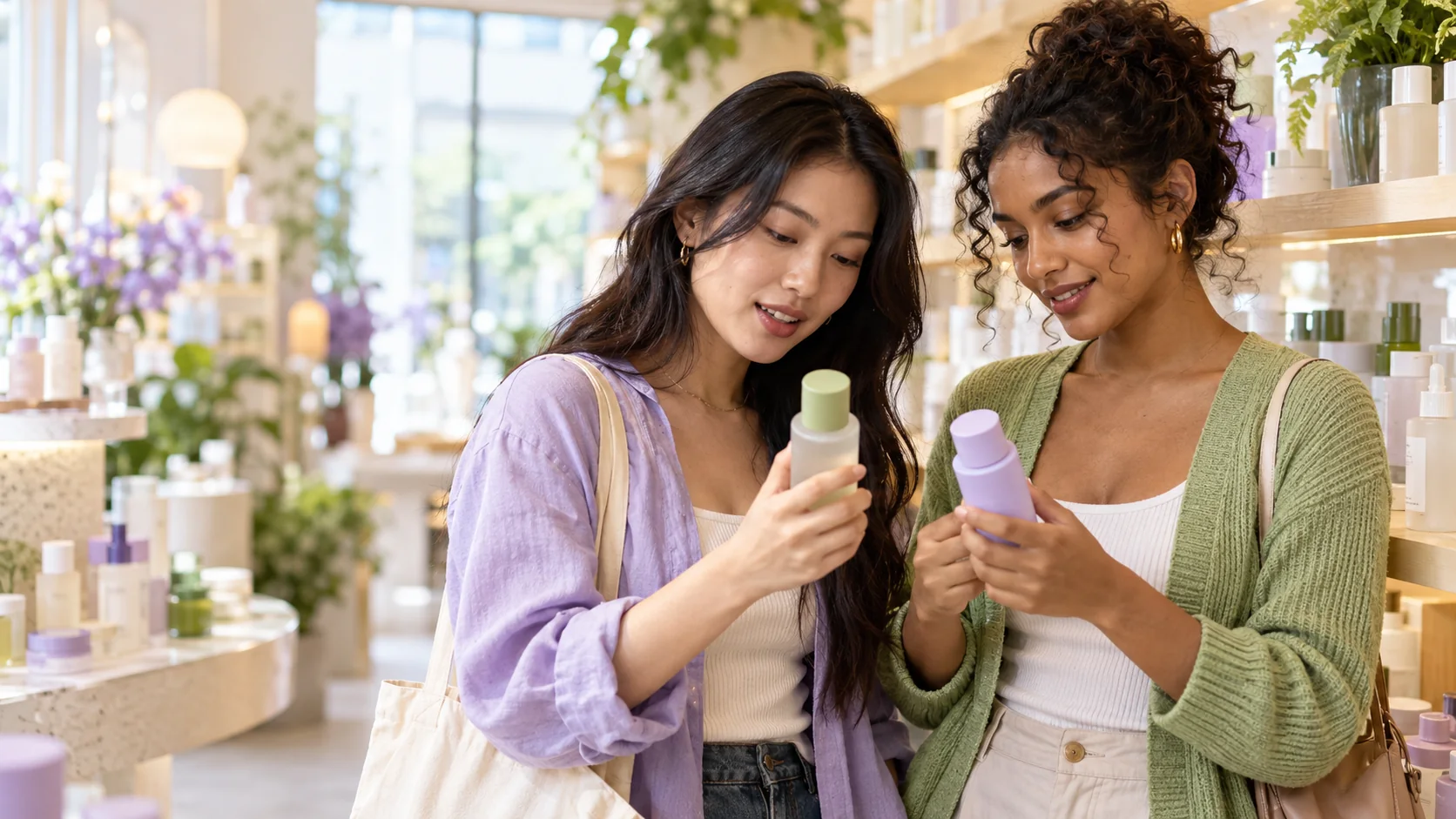
Project Glow used primary regulator guidance for market claims, manufacturer pages for the two named product examples and dermatology guidance for younger skin. We did not independently test the named products or the illustrative products in the photograph. This guide is general education, not a diagnosis or individual treatment plan. See our editorial standards for how we assess claims and update content.
- Korean MFDS: functional cosmetics
- Japan PMDA: cosmetics and quasi-drugs FAQ
- Australian TGA: sunscreen regulation
- American Academy of Dermatology: skincare for tweens and teens
- EU Cosmetics Regulation: ingredient list order and the below-1% exception
- EU Regulation 655/2013: evidence for cosmetic product claims
- US FDA: cosmetic labelling claims and drug-type claims
- Torriden: DIVE IN Serum product details
- Rohto: Hada Labo Gokujyun Premium Lotion product details