
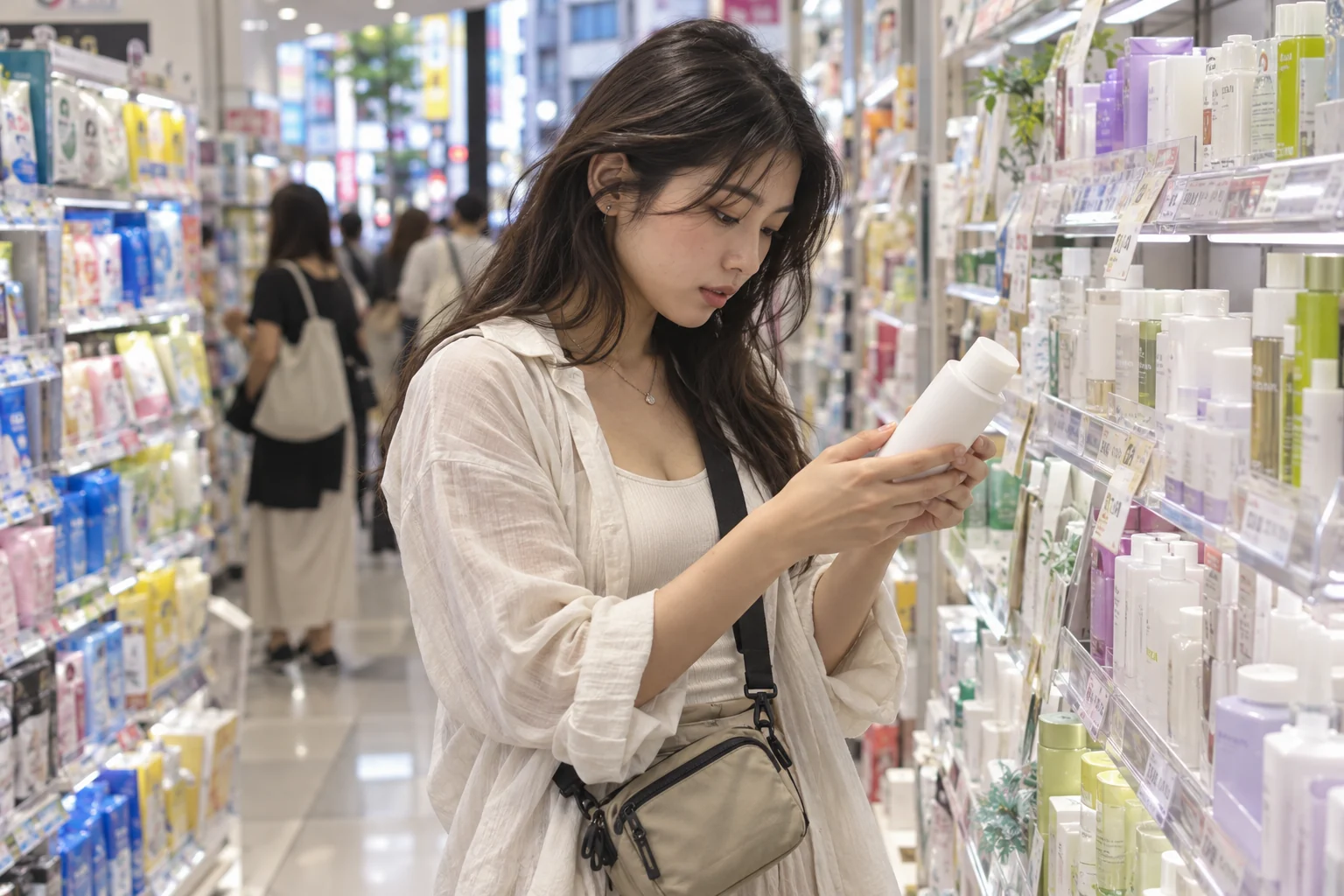
Find a useful aisle, then narrow the choice
Japan's tourism agency notes that drugstores are a popular way to explore Japanese skincare. Start with the category your routine needs: cleanser, hydrating lotion, moisturiser or sun protection. Look at bottle size and refills, and compare the actual unit price rather than just the promotional sign.
A shelf may offer several similar-looking bottles within one range. Check the exact version, fragrance, texture and directions. Packaging can differ between domestic, travel and export editions, so a review of a familiar bottle may not describe the one in your hand.
Translate the words that change the decision
‘Lotion’ on a Japanese skincare shelf can refer to a watery hydrating step. It does not automatically replace a cream if your skin needs one. Translate the product type, the full ingredient list, use instructions and cautions, then compare those details to your usual routine.
If the pack highlights a hero ingredient, ask what the entire formula is meant to do and whether the claim has product-specific support. A readable photo of the front and back gives a scanner more context than a cropped beauty shelf tag. Always review the original pack because machine translation can miss nuance.
Cosmetic or quasi-drug?
Japan's Pharmaceuticals and Medical Devices Agency explains that ordinary cosmetics and quasi-drugs are different regulatory categories. Products with approved active ingredients may be classified as quasi-drugs in Japan and require approval there. That local classification does not transfer automatically to the US or another destination market.
Treat a translated term such as ‘medicated’ or ‘whitening’ as a prompt to inspect the specific product claim and directions. It does not prove a product will treat your condition. Project Glow's Claim Check can put a pack claim next to its listed ingredients and evidence; its result is general information, not a legal or medical judgement.
Take your finds home sensibly
Travel can change humidity, sun exposure and how often you cleanse. Keep a reliable basic routine while away and test new purchases one at a time after travel. If you are bringing a sunscreen to the US, check the exact label and local requirements rather than assuming a Japanese UV grade substitutes for US Drug Facts.
Save photos of the packaging and note where you bought each item. That makes it easier to re-check a formula, find the right refill, or ask a clinician about a reaction later.
Keep exploring
Frequently asked questions
What is Japanese skincare lotion?
Often a lightweight, watery hydrating step. Read the exact directions and formula; it may not replace a moisturising cream for everyone.
What does quasi-drug mean on a Japanese skincare product?
It is a Japanese regulatory category distinct from ordinary cosmetics. The exact claim and approved active ingredients matter; the classification does not automatically carry into another country.
Can I rely on a translated shelf label?
Use it as a starting point, then check the original pack, full ingredients, directions and warnings.
Should I buy a Japanese sunscreen for use at home?
Check the exact product and your home market's label rules. If you are shopping in the US, a Japanese UV mark alone is not a substitute for a US sunscreen label.
Sources and further reading
- Japan National Tourism Organization: shopping in Japan
- Japan National Tourism Organization: Japanese skincare shopping
- Japan PMDA: cosmetics and quasi-drugs FAQ
- American Academy of Dermatology: travel skin care tips
- US FDA: sunscreen and sun protection
Sources checked 2026-10-18. This article is general education, not a diagnosis or individual treatment plan. Ask a qualified clinician about persistent symptoms, pregnancy or medication questions.