
Our hyperpigmentation guide covers the broader routine, and our sunscreen label guide explains SPF and broad spectrum. This is a closer look at one question: what changes when a sunscreen adds a visible tint?
UV protection and visible light are different questions
Sun protection factor (SPF) is a measure associated with protection from sunburn-causing UVB, while broad-spectrum sunscreen also addresses UVA. Visible light sits outside that UV range. So a high SPF number does not, on its own, tell you how well a product reduces visible-light exposure. [3]
In a small human experiment, a formulation with yellow iron oxide reduced visible-light-induced pigmentation compared with unprotected skin. The study included 10 volunteers with Fitzpatrick skin phototypes IV–VI and also tested a laboratory method. It supports the idea that pigment composition and amount matter. It does not tell us that every tinted sunscreen or every shade performs equally. [2]
What happened in a melasma trial?
A 2025 study in southern France randomly assigned 42 women with melasma to a tinted or untinted sunscreen for five summer months. The sunscreens had similar UV protection; the tinted one also contained iron oxides and pigmentary titanium dioxide for visible-light coverage. Forty-one participants completed the study. [1]
Both groups improved on the clinical melasma severity score, with no significant difference between groups on that score. The tinted group did better on some instrumental measures of the colour difference between melasma areas and surrounding skin after five months. That is a narrower, more useful conclusion than saying the tint “cured melasma”. [1]
The trial tested two particular products in a mostly phototype III group, with a small number of phototype IV participants. Some authors worked for, and the study was funded by, the maker of the tinted product. Those details matter when applying its results to other formulas, different skin tones and your own daily use. [1]
How to shop for a useful tint
Check: Broad-spectrum SPF and the label directions; Why it matters: UV protection remains essential; apply the sunscreen as directed. [3]
Check: Pigments in the ingredient list; Why it matters: Iron oxides are commonly used for visible-light attenuation, but the name alone cannot give a protection factor. [1][2]
Check: A wearable shade; Why it matters: If the tint looks ashy or too dark, you may be tempted to use too little.
Check: Comfortable coverage; Why it matters: Try the amount the directions require, not just a tiny colour swatch.
Check: Product-level evidence; Why it matters: A finished-product visible-light test is more informative than a generic “tinted” claim.
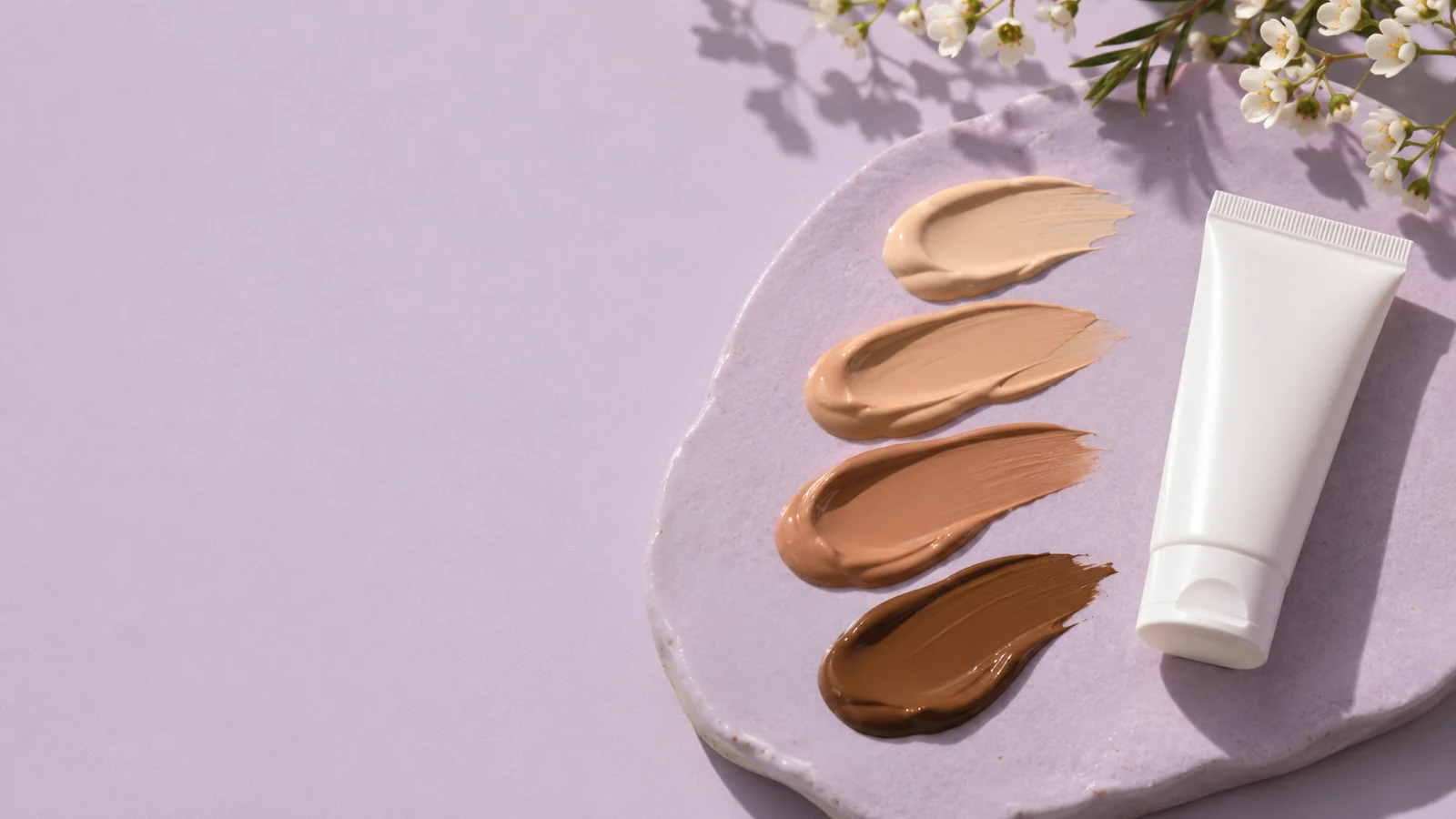
The four swatches in this article's image are illustrative editorial props, not tested products or a shade recommendation. There is no universal shade that suits every skin tone. It is reasonable to compare how a product looks at the amount you would actually wear before buying.
Tinted sunscreen is one part of sun protection. The TGA advises applying sunscreen generously to exposed skin and reapplying at least every two hours, particularly after swimming or towelling. Follow the product label and use shade, clothing and a hat as appropriate. [3]
Keep exploring
Frequently asked questions
Is tinted sunscreen always better for hyperpigmentation?
No universal ranking follows from the colour alone. The pigments, their amount, the UV filters, the whole formula and how much you apply all affect the practical choice. A 2025 melasma trial found an advantage on some colour-homogeneity measurements for one tinted formula, while the clinical severity score improved in both groups without a significant between-group difference. [1]
Do all iron oxide shades protect against visible light equally?
Do not assume so. The small yellow-iron-oxide experiment tested a specific formulation and exposure method. A different pigment mix or finished product needs its own evidence. [2]
Can makeup with iron oxides replace sunscreen?
An ingredient list is not an SPF test or an application guide. Unless the product is a labelled sunscreen used at its directed amount, rely on a suitable sunscreen for UV protection. [3] The take-home: iron oxides can add a useful visible-light consideration for dark spots, but the best tint is one with appropriate UV protection, credible product evidence and a shade you can apply generously. Read the broader Project Glow hyperpigmentation guide or explore the Journal.
Sources and further reading
- Polena et al., randomised tinted versus untinted sunscreen trial in melasma, *Journal of Cosmetic Dermatology* (2025)
- Ruvolo et al., yellow iron oxide and visible-light-induced pigmentation, *International Journal of Cosmetic Science* (2018)
- Therapeutic Goods Administration, how to use sunscreens
Sources checked 2026-11-13. This article is general education, not a diagnosis or individual treatment plan. Ask a qualified clinician about persistent symptoms, pregnancy or medication questions.