
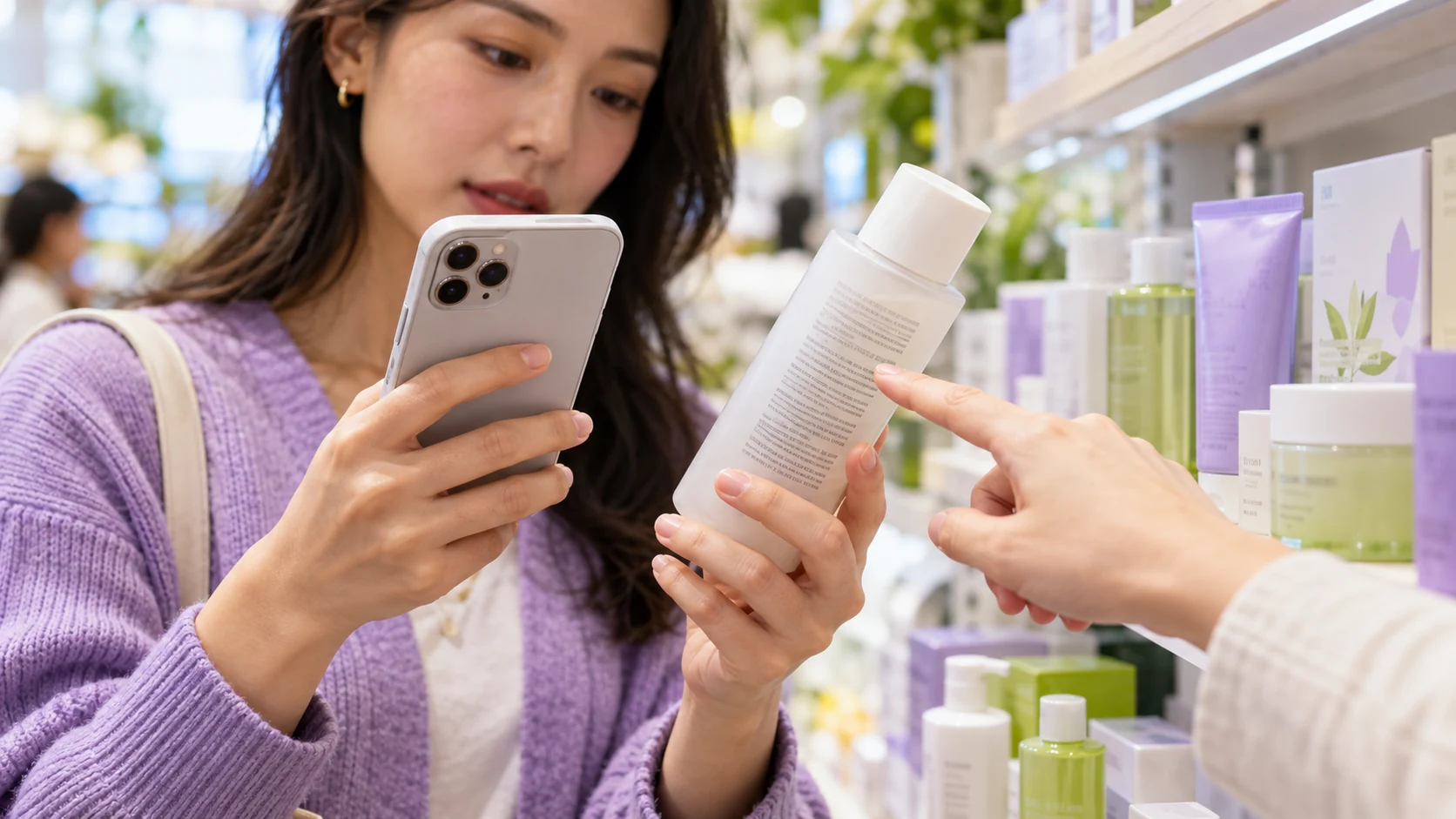
Barcode scan, label scan and ingredient scan are different
A barcode lookup searches for an existing product record. It is quick, but the record can be missing, outdated or linked to another market. A label scan reads the package in front of you, while an ingredient scan focuses on the INCI list. The most useful workflow lets you review and correct the extracted text before analysis.
For Korean and Japanese products, translation adds another layer. Keep the original text beside the English view, photograph the full pack and check whether the product is a cosmetic, quasi-drug or another regulated category in its home market.
What ingredient order can suggest
In the United States, cosmetic ingredients are generally listed in descending order of predominance. Ingredients at one percent or less and colour additives have specific ordering exceptions. That means a scanner can sometimes identify a possible low-level token dose, but it should not present the position as an exact percentage.
Project Glow's Claim Check compares a stated percentage with the list and with the range used in cited studies where that information is available. A surprising mismatch becomes a prompt to check, not an accusation that the product is unlawful.
What a claim check adds
Ingredient claims ask whether the named ingredient is present and whether the list is compatible with a stated amount. Efficacy claims such as brightens or clears breakouts can be mapped to relevant actives and the strength of evidence. Marketing terms with no fixed legal meaning need a plain-language explanation rather than a scientific badge.
Free-from claims can be checked against the visible list. Drug-like claims need extra caution because product classifications and permitted wording vary by region. A consumer card should identify the market and make clear that it is general information.
Use the result as a better question
A good scan should help you decide what to verify next: the current manufacturer list, the product directions, an allergy, an interaction, a local restriction or a clinician's advice. It should also let you save the corrected product record, compare it with alternatives and avoid buying duplicates.
When the pack is damaged, the photo is blurry or the formula version is uncertain, rescan instead of treating a confident-looking output as fact.
Keep exploring
Frequently asked questions
Can a skincare scanner detect every unsafe ingredient?
No. It can only analyse the text and data available to it. Concentration, contamination, counterfeit products, personal allergy and market-specific rules may require other evidence.
Can a scanner tell how much niacinamide is in a product?
Only when a trustworthy source or the pack states the percentage. Ingredient order may provide a clue, but it does not reveal every exact concentration.
Can I scan Korean and Japanese skincare in English?
Project Glow is designed to translate Korean and Japanese label text into a reviewable English view while retaining the original text. Results still depend on photo and print quality.
What does Partly backed mean in Claim Check?
It means the formula contains some support for the claim, but the evidence, likely amount, product context or wording does not justify treating the whole claim as fully supported.
Sources and further reading
Sources checked 2026-10-21. This article is general education, not a diagnosis or individual treatment plan. Ask a qualified clinician about persistent symptoms, pregnancy or medication questions.