
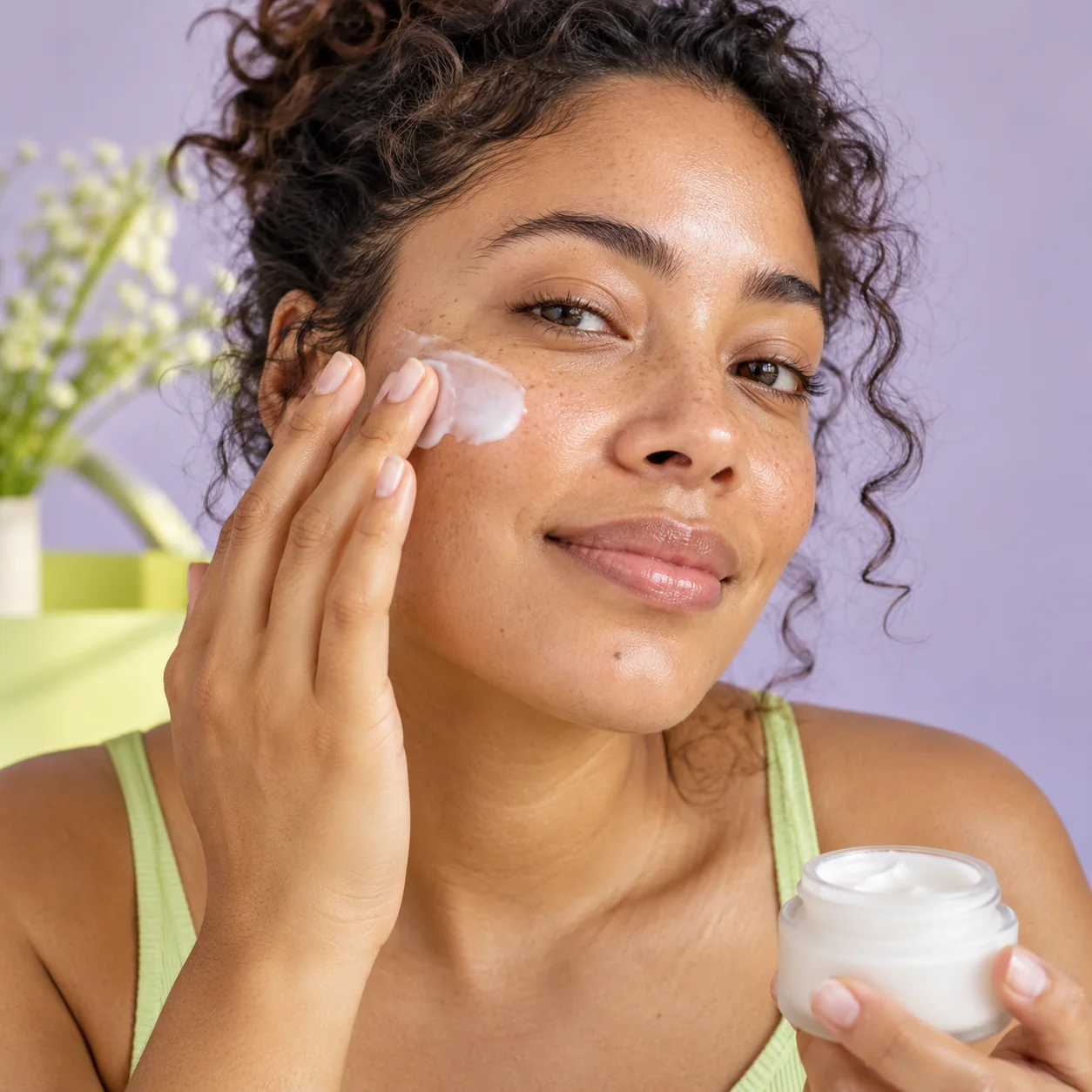
Make the routine smaller
When skin feels tight, itchy or stings, adding several exfoliants can make it harder to identify the cause. The AAD advises moisturising after bathing and whenever skin feels dry. A cream or ointment often helps more than a light lotion for eczema-prone skin.
Choose lukewarm water and a mild cleanser. The goal is to support comfort and reduce irritation, not to chase an instant 'glass skin' result. Persistent rash, swelling or broken skin needs medical advice.
Fragrance-free is different from unscented
An unscented formula may contain fragrance that masks another smell. A fragrance-free label is a better starting point for people whose eczema or contact dermatitis is triggered by fragrance. Even then, no product is guaranteed reaction-free.
Test before full-face use
The AAD recommends trying a new skincare product on a small area, such as the inner arm, over seven to ten days. Stop if it causes a concerning reaction. If the cause of repeated reactions remains unclear, a dermatologist may suggest formal patch testing. A consumer home test cannot rule out every allergy.
Frequently asked questions
Is unscented the same as fragrance-free?
No. Unscented products can contain masking fragrance; fragrance-free is usually the clearer choice when fragrance causes irritation.
How long should I test a new product?
The AAD suggests testing on a small area for seven to ten days before broader use.
Can a scan diagnose an allergy?
No. A scan can identify listed ingredients, but only a clinician can assess an allergy and arrange diagnostic patch testing where appropriate.
Sources and further reading
Sources checked 2026-10-08. This article is general education, not a diagnosis or individual treatment plan. Ask a qualified clinician about persistent symptoms, pregnancy or medication questions.