
If you already know the retinoid basics, the more useful shopping question is: what does this particular product deliver, and at what cost to my skin's comfort?
One conversion step is not a product verdict
Human skin research supports the retinol → retinal → retinoic acid pathway. Retinal can also move into storage forms; how much follows each route depends on biology and conditions. A laboratory pathway is therefore a way to understand the ingredients, not a promise that any retinal serum acts a set number of times faster than any retinol cream. [1][2]
A small, investigator-blinded split-face study offers a more concrete comparison. Twenty-three Korean volunteers used specific 0.05% or 0.1% multilamellar-vesicle retinal creams on one side and matching-percentage retinol creams on the other for eight weeks. Both sides improved on the study's photoaging measures; the retinal formulation performed better on several measured outcomes. The study was short and small, and the delivery systems differed. It cannot rank every product on a shelf or establish a universal irritation rule. [3]
Four checks that matter more than a label shortcut
On the pack or product page: Named active; What to ask: Is it retinal/retinaldehyde, retinol, a retinyl ester or another retinoid? These are not interchangeable names.
On the pack or product page: Stated percentage; What to ask: Is the number for the named active, a blend or an encapsulated complex? Two different ingredients at the same percentage are not equivalent doses.
On the pack or product page: Finished-formula evidence; What to ask: Was this product tested on people for the outcome you care about, or is the claim borrowed from an ingredient study?
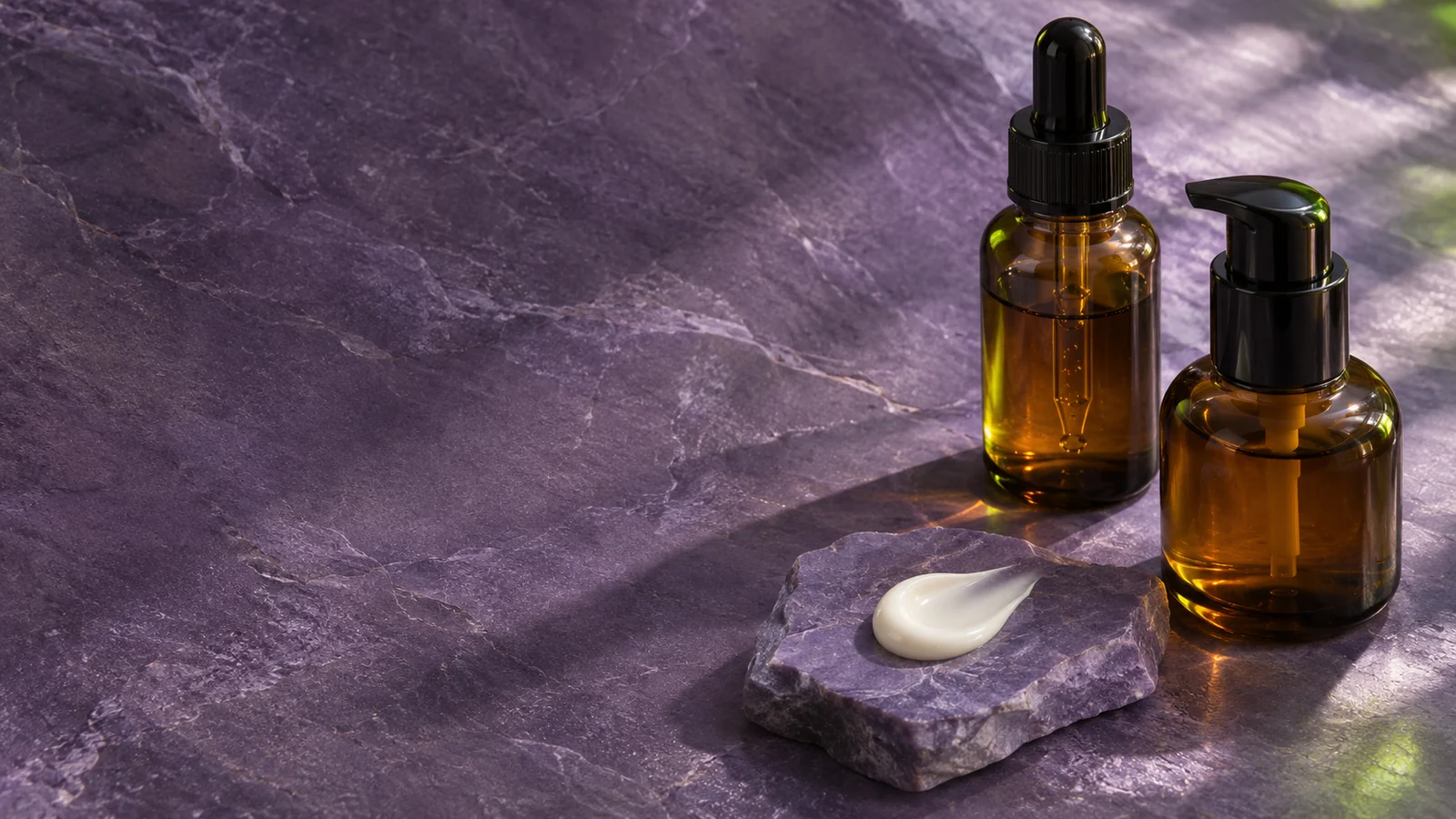
On the pack or product page: Packaging and directions; What to ask: Is the bottle light-protective, how should it be stored, and how often does the maker say to use it? Packaging is a useful clue, not proof of stability.
The packaging check has a scientific reason. A primary analysis of 12 commercial cosmetic products found that retinoid stability varied substantially across the tested formulations and light exposure mattered. That study measured retinol and several other derivatives, not a universal expiry rule for retinal. It supports asking for product-specific stability information and following the actual storage instructions; an amber or airless container alone cannot certify the amount left when you apply it. [4]
How to start without turning irritation into a goal
Choose one retinoid product and follow its label. An approach recommended by the American Academy of Dermatology is to begin with a less intense formula on alternate nights and increase only as tolerated. Moisturise if needed and use sun protection during the day. Persistent burning, pronounced peeling or worsening redness is a reason to pause and seek advice, not a sign to push harder. [5]
Retinoids should be avoided during pregnancy according to the AAD. If you are pregnant, planning pregnancy, using a prescription treatment or treating an inflammatory skin condition, ask your clinician which option is appropriate before starting. [5]
Keep exploring
Frequently asked questions
Is retinal always stronger than retinol?
No universal product ranking follows from the name alone. The ingredients have different positions in a vitamin A pathway, but formulation, concentration, delivery, frequency and tolerance affect the real-world result. The direct comparison study tested particular creams over eight weeks. [1][3]
Is 0.1% retinal the same as 0.1% retinol?
No. The number describes a concentration of a named ingredient, not equivalent clinical effect. Check what the percentage refers to and whether the finished product has human evidence for its claim. [3]
Do I need to use retinal and retinol together?
Usually there is no reason to stack two new retinoid products in one routine. Start with one, follow its directions and assess tolerance before changing your plan. A pharmacist or dermatologist can help if you use prescription retinoids. [5]
Does a dark or airless bottle guarantee the formula works?
No. Light-protective packaging can be sensible, but the stability of the particular finished formula needs testing. Follow the printed storage and expiry directions. [4] The take-home: the best comparison is the formula you can use as directed, tolerate and evaluate against a realistic goal. Read Retinoids: a beginner's guide for the wider family and Project Glow's editorial standards for how we weigh skincare claims.
Sources and further reading
- Duell et al., retinoid responses in human skin, *Journal of Investigative Dermatology* (1997)
- Sorg et al., metabolism of topical retinaldehyde, *Dermatology* (1999)
- Kim et al., retinal versus retinol split-face trial, *Journal of Cosmetic Dermatology* (2021)
- Temova Rakuša et al., commercial retinoid stability, *Journal of Cosmetic Dermatology* (2021)
- American Academy of Dermatology, retinoid or retinol?
Sources checked 2026-11-17. This article is general education, not a diagnosis or individual treatment plan. Ask a qualified clinician about persistent symptoms, pregnancy or medication questions.