Chinese skincare can be interesting to discover while travelling or shopping online. The challenge is usually less dramatic than a mystery ingredient: small print, unfamiliar names, different product versions and an English result that may omit a line. A short checking routine helps you decide what you actually know.
A five-step label reading workflow
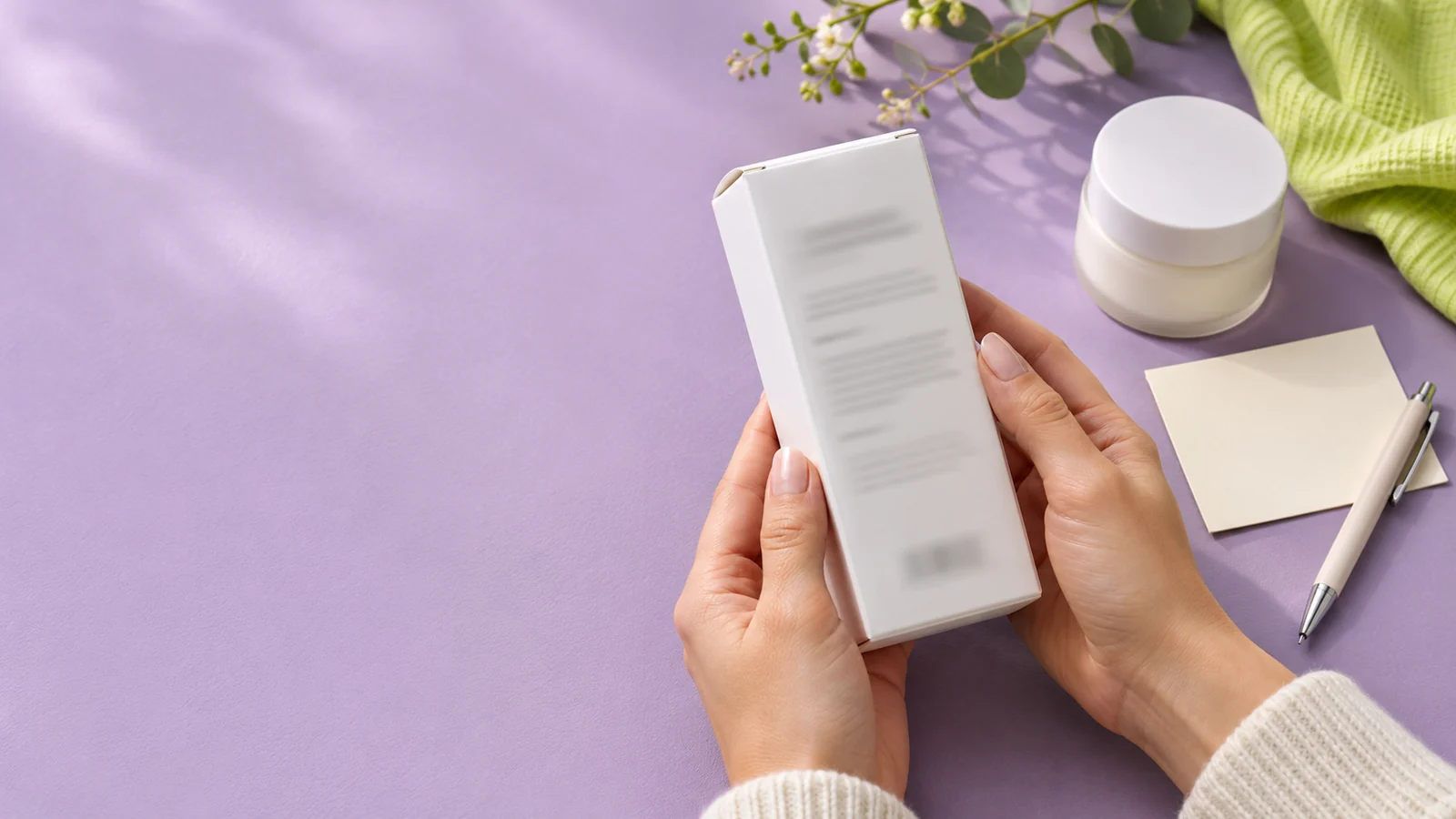
1. Identify the exact product. Save a clear photo of the front and back, including the product name, size and any version or shade. Match it to the seller's listing. A similar-looking carton can represent a different formula.
2. Capture the full original ingredient list. Photograph the complete panel in good light, in focus and without cutting off the start or end. If the box has a leaflet or a second panel, check that too.
3. Compare original and English names. Treat optical character recognition and translation as suggestions. Check that the number and order of entries make sense and inspect unfamiliar names against the original print. If a line is blurred or missing, do not fill it in from a different listing.
4. Read beyond ingredients. Find the usage instructions, warnings and shelf-life information. Ask the retailer for a clearer photo or manufacturer information if these cannot be understood. The ingredient list does not tell you how to use a product safely. [1][2]
5. Check the destination market. If you are buying for use in Australia, compare the information available at sale with Australian guidance. A claim that something is “banned” or “approved” needs the relevant country, product category, substance, concentration and current rule. [3][4]
What an ingredient translation can and cannot show
A translated list can help you: Recognise a named ingredient and search for it; It cannot establish by itself: Its exact concentration unless disclosed
A translated list can help you: Compare the entries with the original pack; It cannot establish by itself: That the scanner captured every line correctly
A translated list can help you: Ask a better question about a claim; It cannot establish by itself: That a finished formula works as advertised
A translated list can help you: Flag a potential ingredient concern for further checking; It cannot establish by itself: A legal verdict across China, Australia and other markets
Australia's cosmetics ingredient labelling standard permits certain ordering options: ingredients at 1% or more may be listed in descending order, followed by those below 1% in any order, and then colour additives. The standard generally does not require each ingredient's percentage. Position in an ingredient list is therefore a rough clue, not a concentration test. [3]
Why the market matters
China's National Medical Products Administration (NMPA) has its own measures for cosmetics labels. Its English-language materials describe requirements for truthful label information and product-specific marketing; the Chinese text prevails if an English translation differs. Australian requirements are separate. [1][2]
For a consumer buying a skincare product in Australia, the Australian Competition and Consumer Commission says ingredient information should be available at the point of sale and advises checking the product's ingredient label. AICIS regulates the commercial introduction of many cosmetic ingredients into Australia, but it does not test or approve every cosmetic product. Importing a product for personal use and importing products to resell are different situations. [3][4]
So avoid a universal shortcut such as “sold in China means approved in Australia”, or “not on one list means banned worldwide”. A regulator's rule can depend on what the product claims to do, how the substance is used and the jurisdiction. If the answer affects a business import or a treatment-style product, check the current regulator guidance directly.
Before you buy
Keep the original package photograph and the seller's product listing together. If you have a known allergy, compare the original list carefully and ask a pharmacist or clinician when a name is uncertain. If the label is illegible or a seller cannot provide ingredient information, pause the purchase. If a cosmetic causes irritation or an allergic reaction, stop using it and seek medical advice. [5]
Project Glow's Product Scanner describes an English ingredient view for Korean, Japanese and Chinese labels, with the original text available for review and correction. Its free web beta is for adults and may depend on photo and label quality. Use the pack itself as the final cross-check, including any directions or warnings the ingredient scan does not answer.
Frequently asked questions
Can I trust an English ingredient list from an online marketplace?
Use it as a lead, then match it to the exact product and original pack. Ask for clear packaging photos if the product version or list is uncertain. Do not assume a listing for a similar product has the same formula.
Does an unfamiliar Chinese ingredient name mean the product is unsafe?
No. Translation uncertainty is a reason to verify the name, not evidence of harm. Whether a substance is restricted depends on the relevant market and use conditions. [4]
Does Project Glow certify that an imported product is compliant?
No. The scan can help you inspect and correct ingredient names, but it is not a regulatory approval or a substitute for checking the product and current official guidance. The take-home: translate to understand, compare against the original, then check the rules for the market where the product will be sold or used. Explore Project Glow's Product Scanner and the Glow Journal.
Sources and further reading
- NMPA announcement on cosmetics label measures
- NMPA provisions for manufacturing and marketing cosmetics
- ACCC cosmetics ingredients labelling mandatory standard
- AICIS guidance for skincare and cosmetics
- ACCC consumer cosmetic ingredient guide
Sources checked 2026-11-14. This article is general education, not a diagnosis or individual treatment plan. Ask a qualified clinician about persistent symptoms, pregnancy or medication questions.