
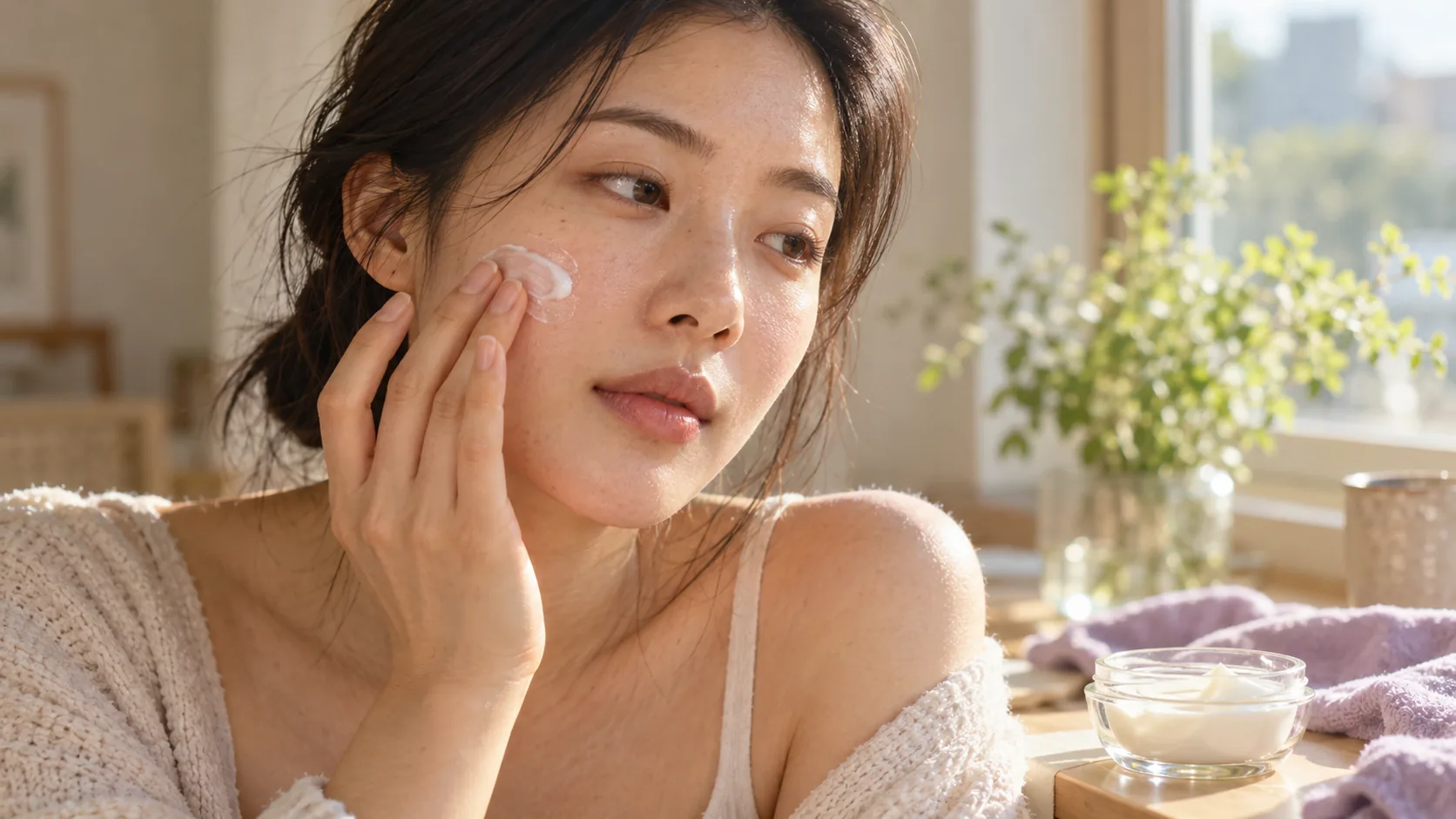
Why the trend resonates
K-beauty has helped make skincare feel creative and ingredient-aware, and market research shows its influence beyond Korea. There is plenty to appreciate in a skin-first approach, including pleasurable textures and consistent basics. But the phrase 'glass skin' often describes a look shaped by lighting, makeup and photography as well as skin care.
Real skin has pores, variation and texture. A dewy finish is not a test of health. If a photo persuades you that your skin needs fixing, pause and ask which specific concern you actually want to address.
What the evidence supports
Moisturisers can help water stay in the outer skin layer. The AAD notes that ingredients such as glycerin and ceramides may support hydration and the barrier, depending on the product and person. Sunscreen matters for UV protection; it is not a shortcut to a filtered finish.
Some K-beauty formulas feature fermented extracts, snail mucin or elaborate layer sequences. Their popularity does not mean every ingredient has the same level of clinical evidence, nor that more layers work better. Compare the formulation and study behind a claim, not the number of steps.
A simpler route to glow
Cleanse gently, moisturise if your skin needs it and protect exposed skin from the sun. If you add an essence or mask for enjoyment, introduce one product at a time and stop if it stings or triggers breakouts. Masks can hydrate, but the AAD warns that irritating ingredients and overuse can damage the barrier.
A low-cost formula that feels good on your skin can be a better choice than an expensive routine you cannot sustain. The Glow Journal's ingredient-first guides help decode what a product actually offers.
Frequently asked questions
Is glass skin a skin type?
No. It is a beauty trend describing a luminous appearance, not a clinical category.
Do I need ten steps?
No. Consistent cleansing, moisturising and sun protection are a useful foundation.
Are K-beauty products always gentle?
No. Suitability depends on the full formula and your skin; stop using a product that causes persistent irritation.
Sources and further reading
- NielsenIQ: K-beauty's viral rise in the US
- NielsenIQ: Global Beauty Views 2026
- American Academy of Dermatology: facial masks and the skin barrier
- Skin barrier physiology review, 2025 (PubMed)
Sources checked 2026-10-08. This article is general education, not a diagnosis or individual treatment plan. Ask a qualified clinician about persistent symptoms, pregnancy or medication questions.